Women’s History Wednesday · Genealogy Research
Titine of Opelousas: The Woman Who Ran the Old Bank Hotel
A free woman of color, a hotel that stood for a quarter century, and the grandmother history forgot.
By The Kinstructure Company · May 26, 2026 · 6 min read
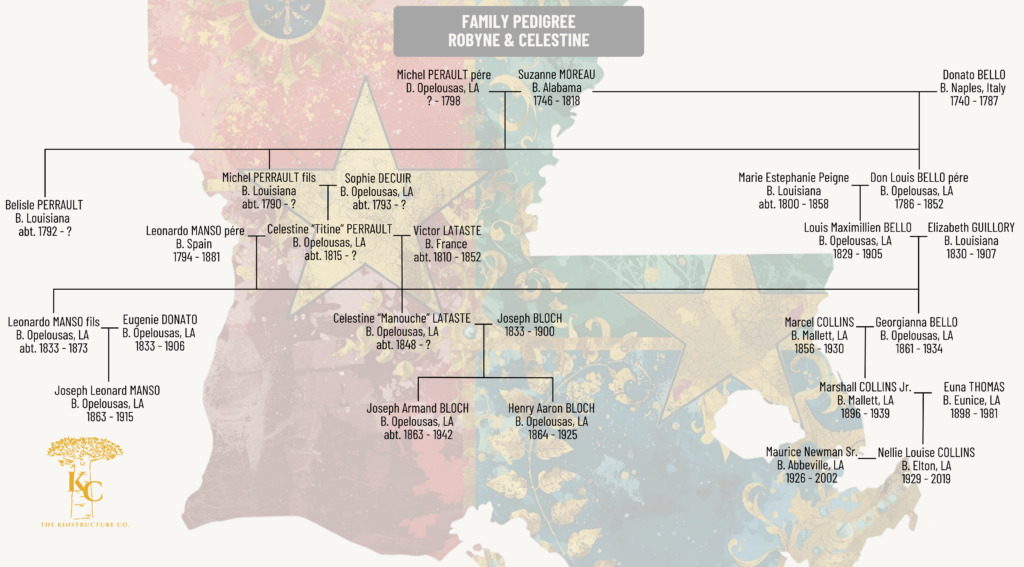
Celestine Perrault is my half first cousin five times removed. The pedigree tracing our shared descent from Suzanne Moreau, my fifth great-grandmother and Celestine’s paternal grandmother, is documented and privately held. I am publishing this record because she has been treated as a footnote in her grandson’s scandal for more than a century. That changes today.
Her grandson’s name has been printed in newspapers from Opelousas to Philadelphia for more than 130 years. Her name has not.
Celestine Perrault was a free woman of color who ran a large hotel in Opelousas. The community called her Titine. The hotel that bore her name operated for at least a quarter century at a working corner of the town.
This is her documented record.
Three Generations Under One Roof
She was born around 1815 to Michel Perault and Sophie Decuir, in St. Landry Parish, Louisiana. By 1850 she was 35 years old and listed as head of her own household. Her son Francois Victor was 8. Her infant daughter, Celestine Blanche, was 1. Her mother Sophie lived under the same roof. Her partner, Victor Lataste, died in 1852. She kept the household intact.
By 1860 she was 45 and the hotel was operating. Sophie was still with her, now 67. Francois Victor was 18. Celestine Blanche, now 12 and called Manouche by her family, was being raised in her mother’s house at the heart of the property.
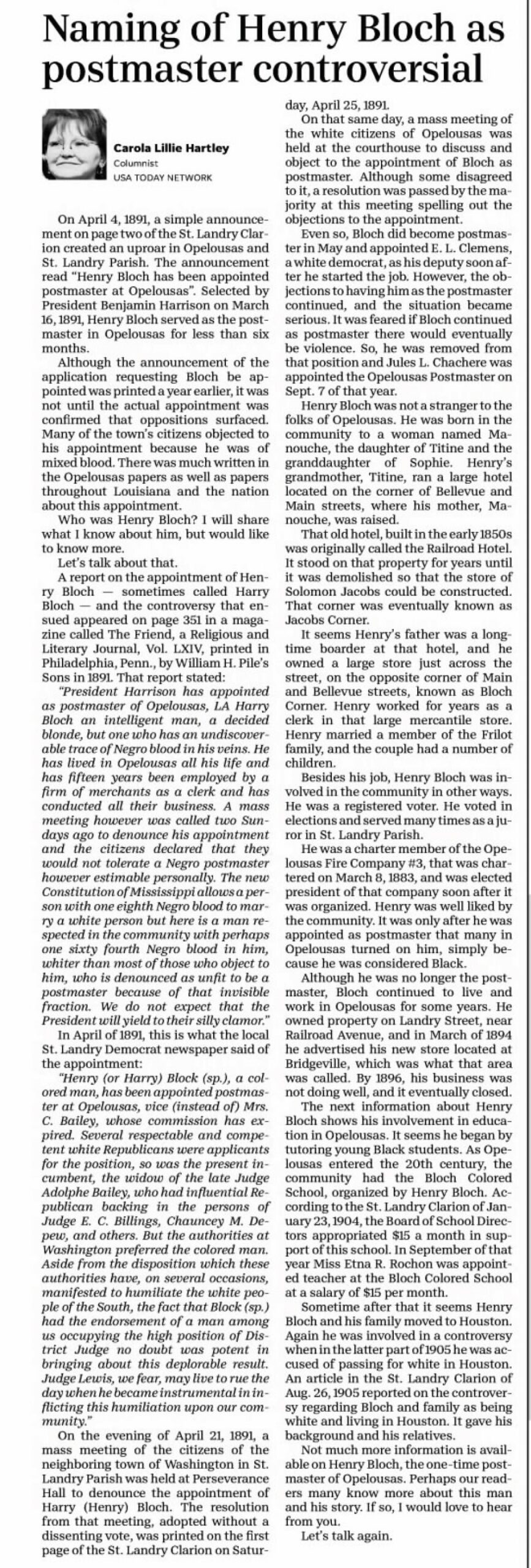
By 1870 she was 54 and the work had not stopped. Her mother Sophie was 78 and still under her roof. Manouche had become a mother of her own. Her sons Joseph and Henry Bloch, ages 7 and 5, were being raised in their grandmother’s hotel. The same Henry who would later flee Opelousas for Houston, and whose racial identity became a public scandal across two states, was being raised by Titine on her own ground.
The same Henry who would later flee Opelousas for Houston, and whose racial identity became a public scandal across two states, was being raised by Titine on her own ground.

Celestine Perrault household, age 35, with mother Sophie, son Francois Victor, and infant daughter Celestine Blanche. 1850 U.S. Census, St. Landry Parish, Louisiana, dwelling 2257, family 2696. 
Celesty Perrault household, age 54, with mother Sophie Lecuyer (78), son Victor Francis (27), and grandsons Joseph and Henry Bloch (ages 7 and 5). 1870 U.S. Census, Opelousas Ward 1, St. Landry Parish, Louisiana, p. 20, dwelling 119, family 134.
A Working Corner of the Town
Her hotel was a hub. The documentary record shows business after business operating from the property.
In November 1872, sign and ornamental painter Jules André was profiled in the Opelousas Courier, which noted he could be found at Titine’s Hotel. In January 1874, Justice of the Peace Ed. P. Veazie kept his office at Titine’s Hotel and advertised the location in The Opelousas Journal, identifying the property as the old Bank. In November 1874, L. B. Lassiter operated the Rail Road and Express Stable in the rear of Titine’s Hotel and called it the finest country stable in the state. Lawyers, travelers, horsemen, painters, and visiting officials all moved through her property.
The town tax records add another layer to the story. In February 1874, The Opelousas Journal carried a tax collector’s notice for three lots in Opelousas, assessed in the name of Mrs. Celeste Garland and seized for delinquent taxes. The notice identifies the property as now occupied by Celestine Perrault alias Titine’s Hotel. She was running the business on land assessed to another woman, an arrangement that documents both her standing in the community and the legal complexities free women of color navigated to operate businesses at scale.
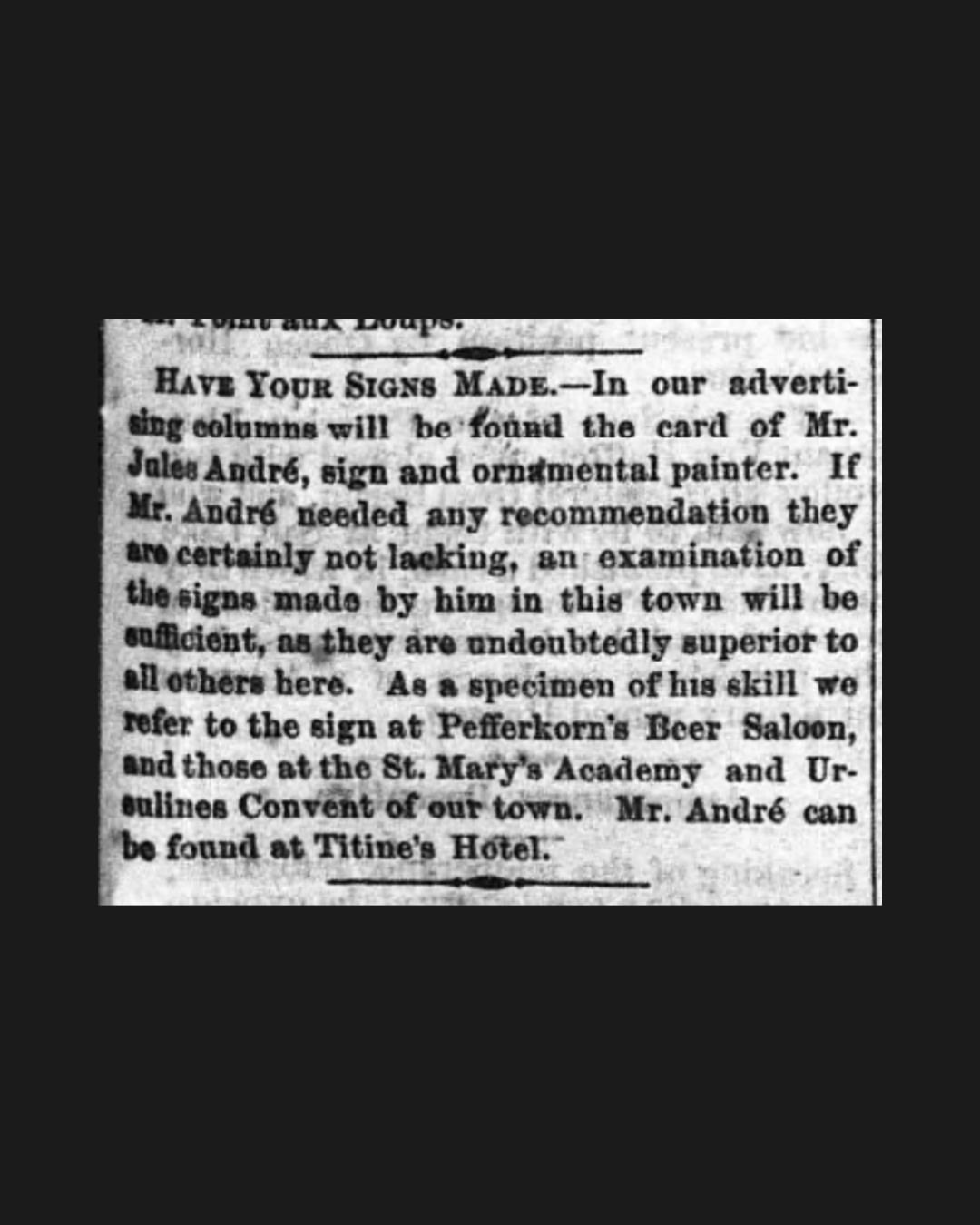
Excerpt, “Have Your Signs Made,” noting that Mr. Jules André “can be found at Titine’s Hotel.” The Opelousas Courier, November 2, 1872, p. 1. 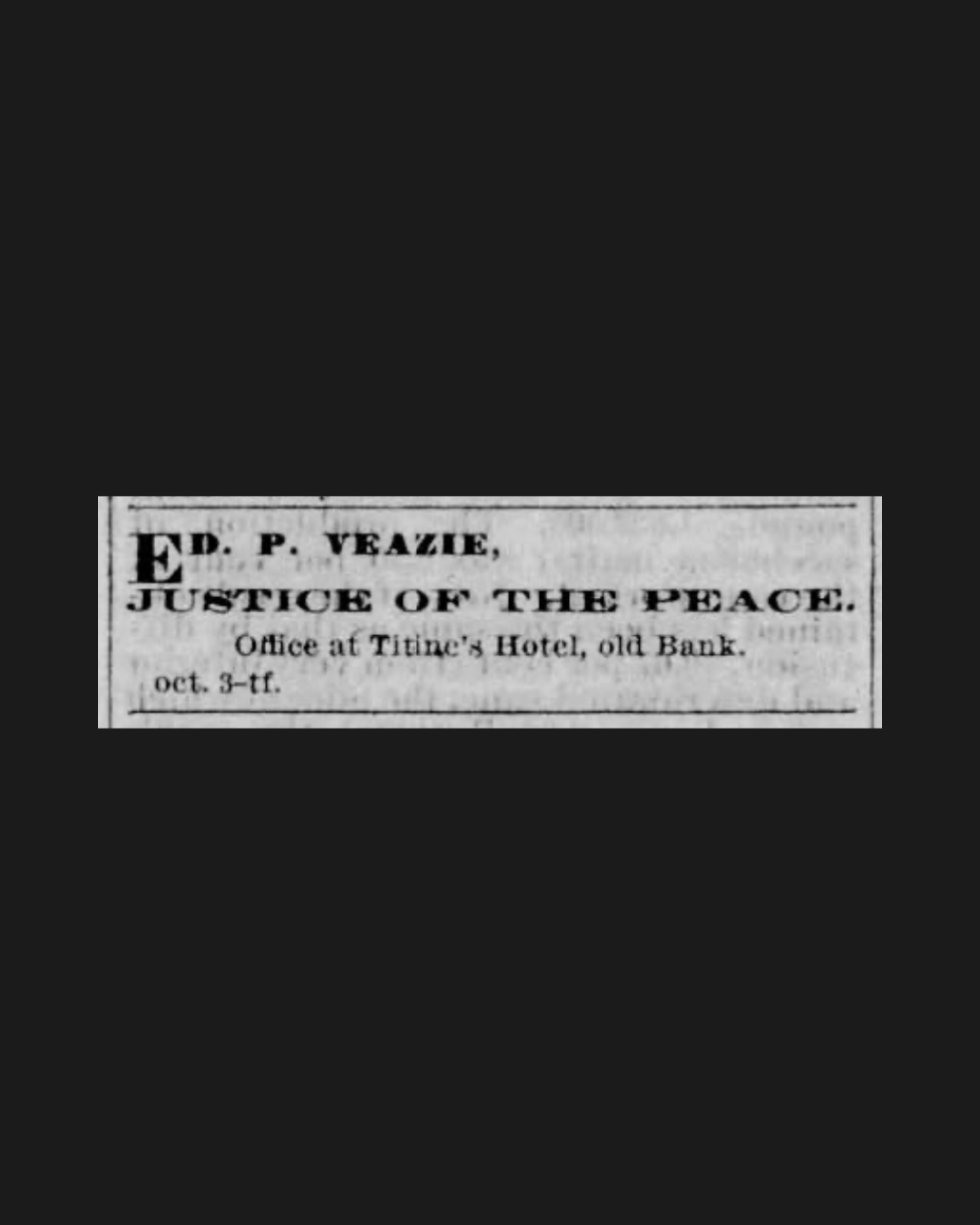
Advertisement, “Ed. P. Veazie, Justice of the Peace,” noting “Office at Titine’s Hotel, old Bank.” The Opelousas Journal, January 30, 1874, p. 4. 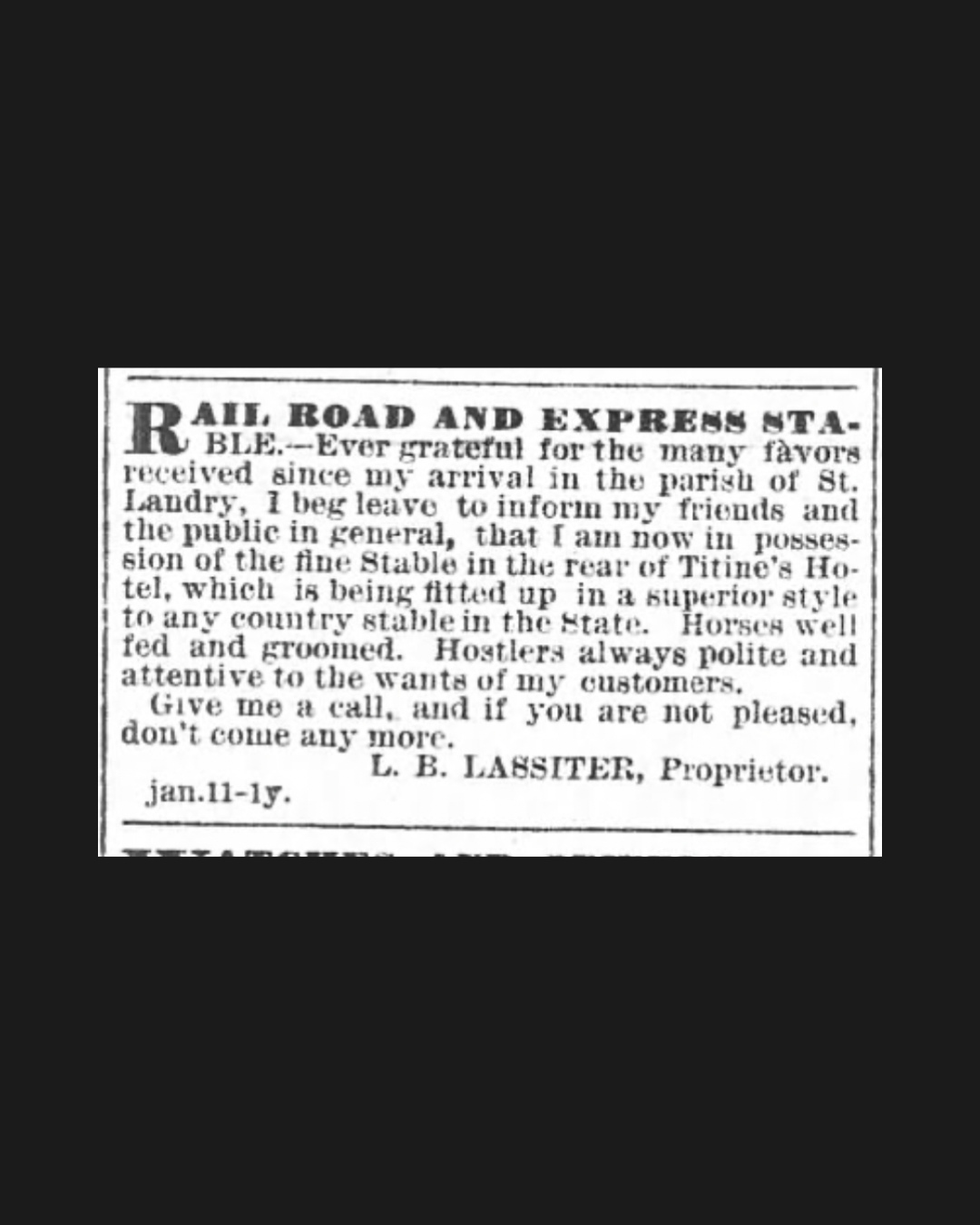
Advertisement, “Rail Road and Express Stable,” L. B. Lassiter, proprietor, located in the rear of Titine’s Hotel. The Opelousas Journal, November 13, 1874, p. 4. 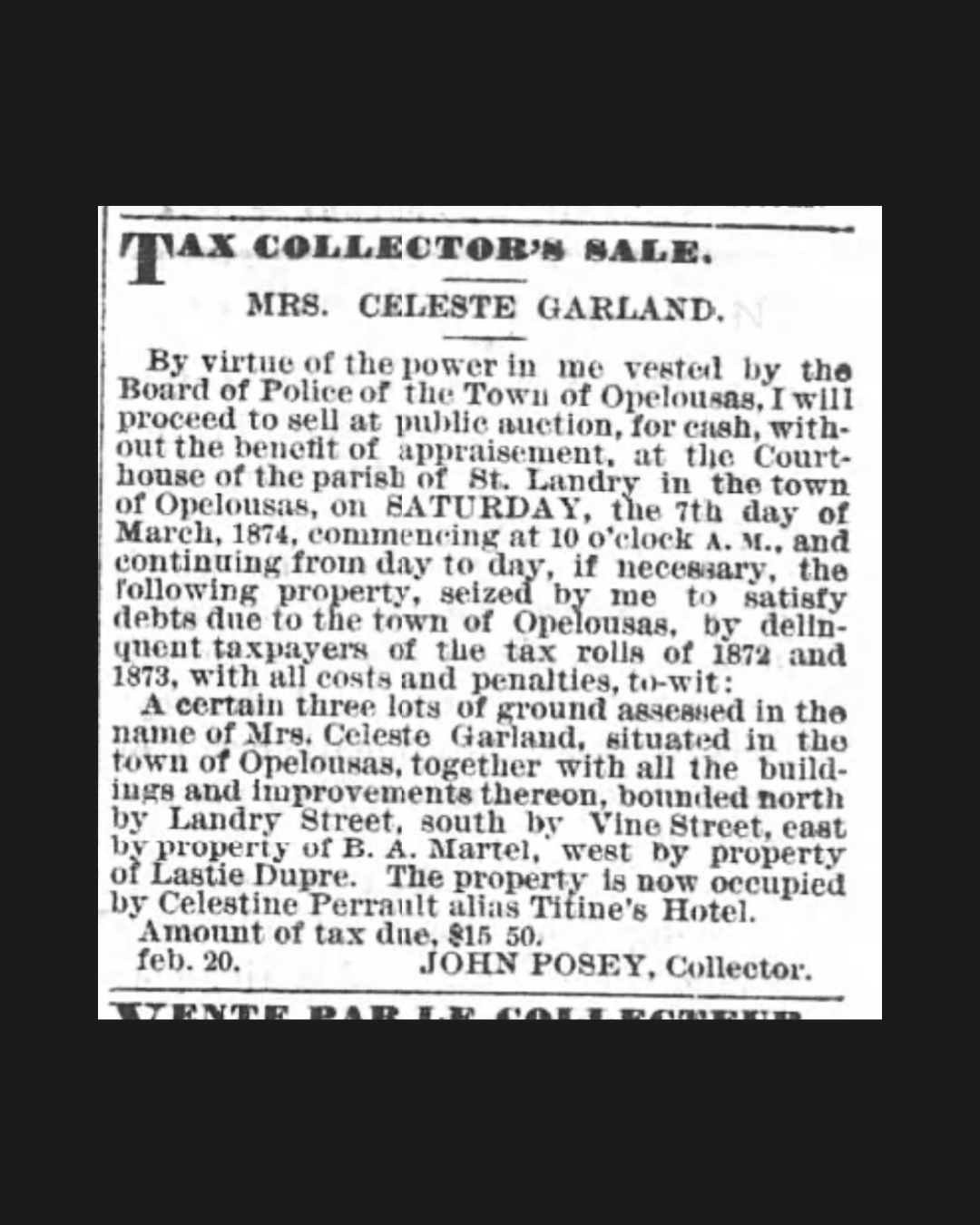
Tax Collector’s Sale notice for three lots in Opelousas, assessed in the name of Mrs. Celeste Garland and described as “now occupied by Celestine Perrault alias Titine’s Hotel.” The Opelousas Journal, February 20, 1874, p. 1.
Erased from the Corner
The hotel stood for decades. It was eventually demolished and replaced by another merchant’s store. The man who built on her corner got his name on it. The woman who ran the hotel got her name removed.
That changes today.
She is not a footnote in someone else’s scandal.
She is not a footnote in someone else’s scandal. She is the architect of a household that fed and housed the public, raised three generations of her own family, and stood at a working corner of Opelousas long enough to outlast the men who profited from its location.
Her name is Celestine Perrault. The community called her Titine. She is my cousin and we are calling her by name.
Who ya’ people? ⚜️

Bibliography
1850 U.S. Census. St. Landry Parish, Louisiana. Population schedule. Digital image. Ancestry.com.
1860 U.S. Census. St. Landry Parish, Louisiana. Population schedule. Digital image. Ancestry.com.
1870 U.S. Census. Opelousas Ward 1, St. Landry Parish, Louisiana. Population schedule. Digital image. Ancestry.com.
“Ed. P. Veazie, Justice of the Peace.” Advertisement. The Opelousas Journal (Opelousas, La.), January 30, 1874, p. 4. Digital image. Newspapers.com.
“Harry Bloch in Houston.” St. Landry Clarion (Opelousas, La.), August 26, 1905, p. 3. Digital image. Newspapers.com.
Hartley, Carola Lillie. “Naming of Henry Bloch as Postmaster Controversial.” Daily World (Opelousas, La.), January 13, 2021, p. A3. Digital image. Newspapers.com.
“Have Your Signs Made.” The Opelousas Courier (Opelousas, La.), November 2, 1872, p. 1. Digital image. Newspapers.com.
Privately held family pedigree chart documenting shared descent from Suzanne Moreau. Texas, 2026.
“Rail Road and Express Stable.” Advertisement, L. B. Lassiter, proprietor. The Opelousas Journal (Opelousas, La.), November 13, 1874, p. 4. Digital image. Newspapers.com.
“Tax Collector’s Sale: Mrs. Celeste Garland.” The Opelousas Journal (Opelousas, La.), February 20, 1874, p. 1. Digital image. Newspapers.com.