
The Spanish colonial notarial archive in New Orleans is one of the most underused biographical record sets in Louisiana genealogy. A four-step method for reading the acts as biographical sources, with free public archive access included.
Genealogy Research
When the Citation Cannot Be Verified: How to Audit Compiled Research Before You Rely On It
A citation in compiled genealogical research is not credible because it has been quoted for thirty years. It is credible because it can be located and confirmed. A four-step audit method.
When the Document Did Not Say What They Said It Said: Reading Primary Text Against Advocacy Interpretation
Primary documents say what they say. What later litigants, descendants, and advocates argue they meant is a separate question. A four-step method for distinguishing primary text from advocacy interpretation.
When You Are Not the First Researcher in the Room: Working from Compiled Records Without Inheriting Their Conclusions

Compiled records, published articles, and family historian notebooks are research maps, not source documents. A four-step method for using another researcher’s work without adopting their conclusions.
Marguerite Scypion: The Louisiana Decree That Outlasted Three Sovereigns
Marguerite Scypion’s freedom argument rested on a 1769 decree by the Spanish Governor of the Province of Louisiana against Indian slavery. Her family fought thirty-one years to make the courts read it as the freedom of every descendant of an Indian woman.
Marguerite and the Margarita Case: A Legal History of One Woman’s Fight for Her Children in Colonial Louisiana, 1764–1808
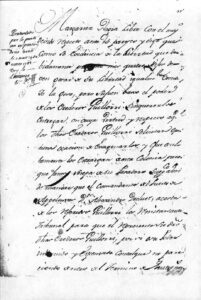
Marguerite was born in Africa, transported to colonial Louisiana, given a fraudulent emancipation, and re-enslaved. In 1782 she filed her own lawsuit. She won the freedom of four children. This is her documented record.