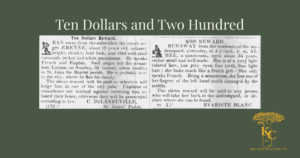
On June 26, 1850, a New Orleans paper ran two runaway notices on one page. Ten dollars for one man, two hundred for a light-skinned woman who could pass as white. The price was a confession. This is the documented record.
Louisiana History
Rose Nicaud of the French Market: The Coffee Woman the Legend Could Not Hold
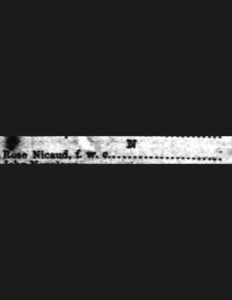
Rose Nicaud sold coffee in the French Market for forty years. Born enslaved and sold six times, she became a free woman of color named in the city’s own record. This is her full documented story, beyond the legend.
The Man Who Saved the Voices: Alcée Fortier and Black Creole Louisiana

Born June 5, 1856, Alcée Fortier transcribed a landmark collection of Black Creole folktales in the French dialect. This is how to use the record he kept and refuse the wall he built.
Reading the Estate Notice: Reconstructing Enslaved Families in St. Landry Parish, 1856
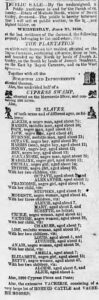
The Opelousas Patriot ran a June 1856 estate sale notice for thirty-three enslaved individuals in St. Landry Parish. Buried in the legal inventory are seven maternal family groupings. The record was created to transfer property. The work is to read it forward.
General Order No. 28 and the Women of Occupied New Orleans, May 15, 1862
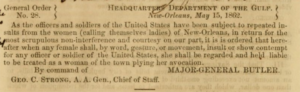
On May 15, 1862, two weeks into the federal occupation of New Orleans, Major General Benjamin Butler issued General Order No. 28. The order disciplined gestures and ignited a propaganda war. This is the documented record.
The Traditional Birthday of New Orleans: May 7, 1718
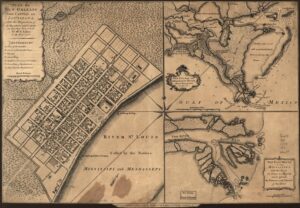
May 7 is the traditional anniversary of the founding of New Orleans, but the actual day is not in the documentary record. The land carries an older name still. This is what the record shows.
Marguerite and the Margarita Case: A Legal History of One Woman’s Fight for Her Children in Colonial Louisiana, 1764–1808
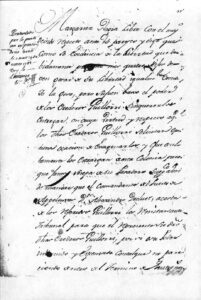
Marguerite was born in Africa, transported to colonial Louisiana, given a fraudulent emancipation, and re-enslaved. In 1782 she filed her own lawsuit. She won the freedom of four children. This is her documented record.